RSS

Monthly Archives: February 2019

The Bible – Not a Rulebook

As Paul continues to deal with the factions of the Corinthian church, he gets to the main point of his message.  It’s an important point that needs to be heard in our generation.

There are times when people use the Bible as a way to push their own agendas.  We need to be warned how to correctly receive and preach the Word of God.

Actually, it’s a warning from Scripture itself.  Believers are sometimes guilty of using the Bible in ways God never intended.  Hopefully, we can learn from the mistakes of others.

Now, brothers, I have applied these things to myself and Apollos for your benefit, so that you may learn from us the meaning of the saying, “Do not go beyond what is written.”  Then you will not take pride in one man over against another.
1 Corinthians 4:6

At the beginning of this letter to the Corinthian church, Paul rebukes the people for the many factions that were splitting their fellowship.  He tells them not to go beyond what’s written.  Literally, that means not to over think the Scripture.  Their problem was that they were basing their divisions on the apostles themselves.

“I follow Peter.”  “I follow Paul.”  “I follow Apollos.”

What does that mean?  It’s clear that they were basing their lives upon certain doctrines that each apostle might have emphasized.  Today, most of us realize that different ministers have specialties in their preaching.

Some tend to emphasize faith, some grace, while others are strong in Godly financial issues.  There are also different personalities and teaching or preaching styles.  That’s the way it should be.  Diversity among the ministry gifts is a positive thing.

The Corinthian church was trying to make it an “either or” type of decision.  Instead of receiving the blessing from each teacher’s particular ministry, they followed one certain apostle exclusively.  In essence, they were saying, “I only follow Paul’s rules.”

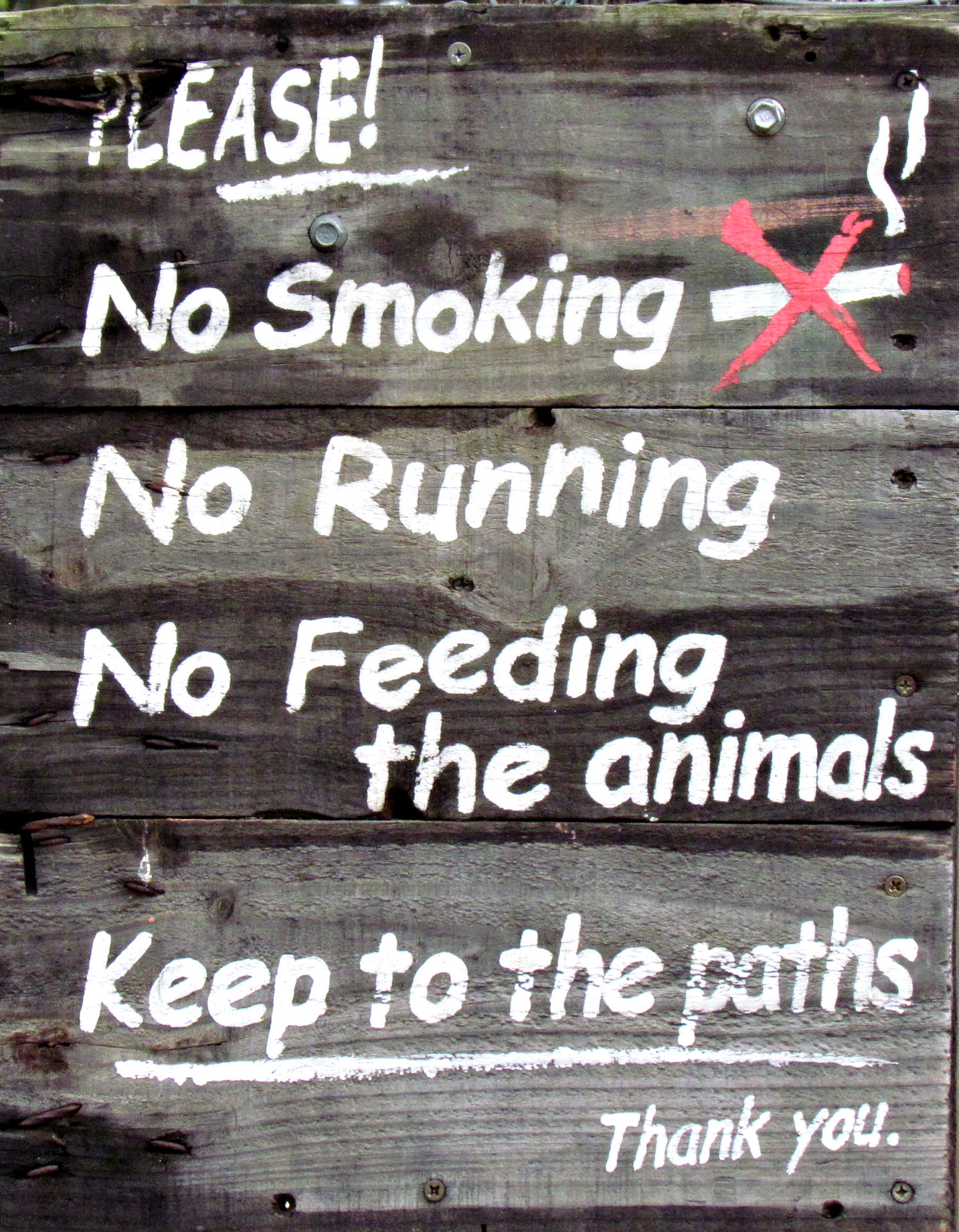
The Christian walk is not a matter of whose rules I follow.  We’re not to over think what’s written.  God never intended for the church to turn the Bible into a rule book.

Yes, the Old Testament contains many rules.  However, our doctrine must always pass through the cross to filter out the things that don’t apply to us.

If we could please God by following a set of rules, then we wouldn’t need Christ to die for us. The fact is that rules are not enough, no matter how good they are.

Rules and regulations have no power to change the course of someone’s life.  It’s only by the power of the Holy Spirit that we can expect to see a difference.

Question: How does our trying to follow rules create more problems for us?

© 2019 Nick Zaccardi

 
Leave a comment

Posted by on February 6, 2019 in Legalism, Ministry, Spiritual Walk, Word of God


Tags: , , , , , , ,

Faithful at the Oars

We need godly leadership in the body of Christ.  But what’s the greatest character trait that a leader needs?  As we continue our study of Paul’s first letter to the Corinthians, we see one that I think is high on the list.

So then, men ought to regard us as servants of Christ and as those entrusted with the secret things of God.  Now it is required that those who have been given a trust must prove faithful.
I Corinthians 4:1-2

The Apostle Paul wrote this section of Scripture to encourage spiritual leaders to be faithful to their calling.  He’s talking to those who work in the ministry.

The word, regard, means, to account or to take inventory.  In essence, we’re told that when other people take inventory of our lives as leaders, it should be obvious to them that we’re servants of Christ.  It should be just as obvious that we’ve been entrusted with the secret things of God.

Unfortunately, what should be is not always what happens in reality.  There’s some uncertainty in Paul’s writing because he uses the phrase men ought to.  This means that he faced the same problem in his generation that we have today.  There are many leaders who don’t live up to their high calling in Christ.

The issue should be as clear to those around us as it was to the members of the Sanhedrin in the book of Acts.  It says that when meeting with the apostles they took note that these men had been with Jesus.  The apostles talked, ministered, and acted like Jesus.

That should be our testimony as well.  It’s sad that in many parts of the church, the ministry has fallen short from this ideal.

But if we judged ourselves, we would not come under judgment.  When we are judged by the Lord, we are being disciplined so that we will not be condemned with the world.
1 Corinthians 11:31-32

In the context of this verse, Paul is teaching on the subject of the Lord’s Supper.  He makes it clear, under the inspiration of the Holy Spirit, that if we would only take the time to judge ourselves we would not come under judgment.

When will we learn this simple lesson?  We wait for condemnation to come on us from the outside before we’ll take a long, hard, and honest look at ourselves.  Then, when we’re criticized for our failure to follow in the footsteps of Christ, it seems to be easier to get defensive than to take stock of our own lives.

We should be constantly comparing ourselves to the ministry of the Lord.  Only in that way can we be assured that we’re adequately portraying the role of a leader.

In the verse, from I Corinthians 4 above, Paul uses the word servant.  It actually refers to an under-oarsman.  Like those responsible for propelling the ship forward, we have a shared ministry with Christ.

Leaders need to be supplying vision to the people.  The church should have a forward momentum because of our commitment as those who lead.  In most cases, if a rowboat isn’t moving, the problem lies with the oarsman.

It’s up to us, as leadership in the body of Christ, to set the speed and direction as ordered by the Lord.

Questions: What are your areas of ministry?  How do you submit those areas to Christ?

© 2019 Nick Zaccardi

 
Leave a comment

Posted by on February 4, 2019 in Leadership, Ministry, The Church


Tags: , , , , , , ,

All for Christ

As we continue through First Corinthians, Paul is teaching the church about human wisdom versus that which is from God.  This is because they had developed factions based upon their favorite teachers.  Paul lets them know that this is a result of worldly thinking.

So then, no more boasting about men!  All things are yours, whether Paul or Apollos or Cephas or the world or life or death or the present or the future — all are yours, and you are of Christ, and Christ is of God.
1 Corinthians 3:21-23

Paul brings us to the bottom line of the discussion.  If you’re truly operating in the wisdom of God, then you will not be boasting about which teacher you like the best.

That’s because we need a multitude of teachers in order to understand the full counsel of God.  It takes a wide variety of personalities, styles, and ministries in order to bring the church to where it should be.

I’d like to think that my teaching has a lot to offer the body of Christ.  However, if I’m the only one you’re listening to, then you have a very poor and imbalanced spiritual diet.

The apostle explains that everyone God places before you has a role to play in your life and development.  They are yours.  They’re a gift from God to help you grow.

It’s not up to us to decide who we want to sit under.  To reject someone that God has sent is to reject the work of the Holy Spirit in you.  I’ve received some great blessings from people who seemed, to me, to be the least qualified.

But Paul doesn’t stop there.  He goes on to lay a foundation for some incredible spiritual truths.  It’s not just teachers that are ours, but other things as well.

We are told in this passage that the present world system is ours.  That’s an important concept to understand.  We’re members of a kingdom that has greater authority than the kingdom of this world.

As believers, we need to walk in this knowledge.  We shouldn’t be trying to live according to the world’s expectations.  Our life is on a higher level.  If we truly understood this, we wouldn’t spend our time trying to get society’s acceptance.

Another thing that’s ours is life and death.  This truth should make us constantly sensitive to God’s plan in us.

The tongue has the power of life and death, and those who love it will eat its fruit.
Proverbs 18:21

The Holy Spirit wants us to produce fruit for the kingdom of God.  That involves both the speaking of life and death.  Yes, you heard me correctly; sometimes we need to speak death over things.  It’s clear from reading the book of Acts that the apostles understood and walked in this.

As an example, we had a large New Age school that operated in our town.  It was a hotbed of occultic activity.  During our prayer meetings, we would curse it (not the people, but the organization).

After a few years of this, it was closed.  I believe that this was a direct result of God’s people taking authority over the enemy’s kingdom.

We’re also told that the present and the future are ours.  Where we find ourselves now as well as where we’re headed is in our control.  It all has to do with our submission to the work of God’s Spirit within us.

I can’t complain about where I’m at.  It’s my own choices that brought me here.  It’s by my own choices that I can move on to new levels in Christ.

The most important point of this is that through us, it all belongs to God.  If we lay hold of these things, even though the enemy rules this present world, God is free to move by His Spirit.  As we allow the Lord to work through us, we can see changes in our sphere of influence.

We must be the catalyst of change that God’s called us to be.

Question: How is God calling you to affect your surroundings?

© 2019 Nick Zaccardi

 
Leave a comment

Posted by on February 1, 2019 in Leadership, Ministry, Spiritual Walk, The Church


Tags: , , , , , , , ,