RSS

Tag Archives: logos

The Word of God as Wheat

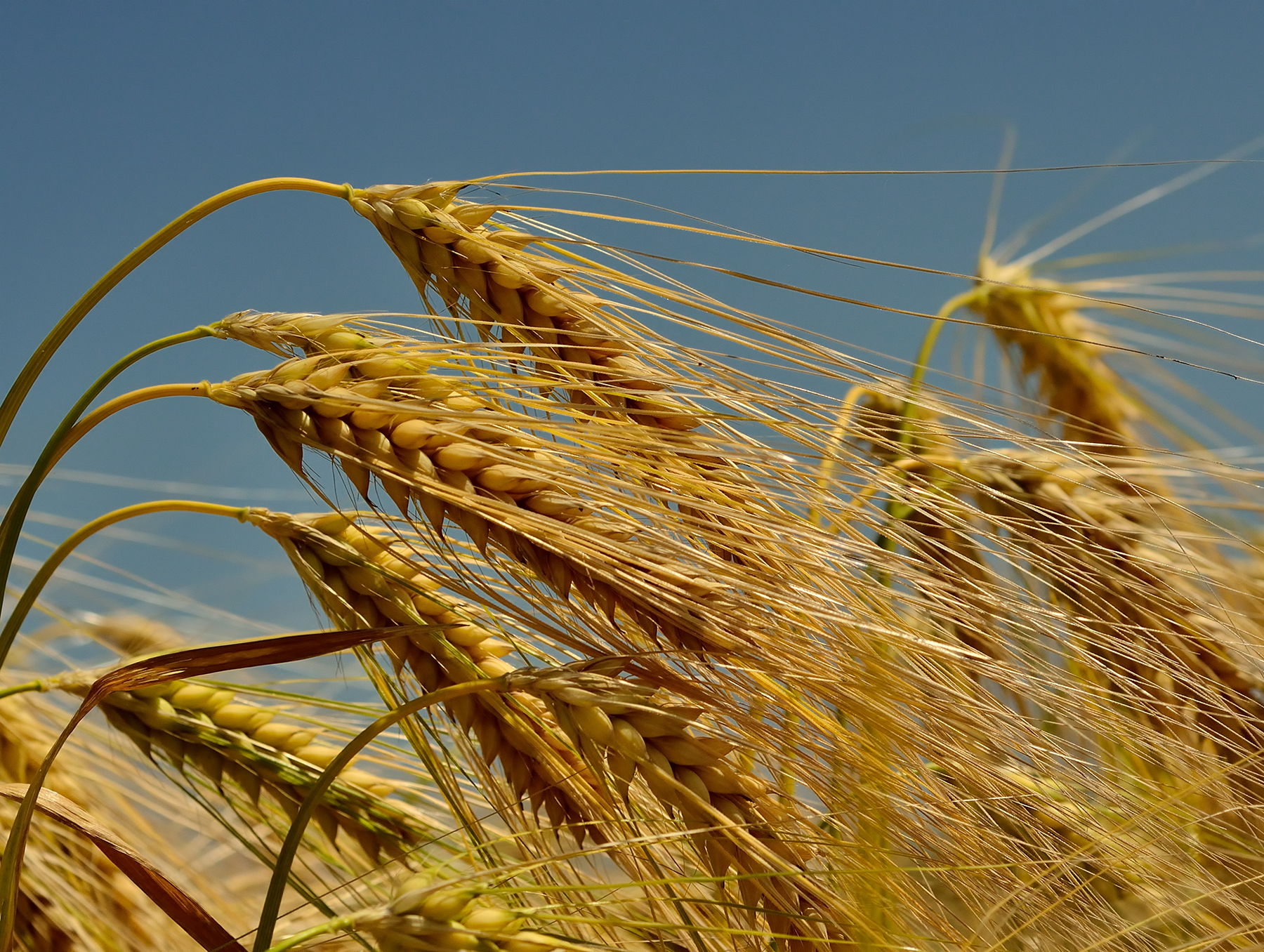
Wheat field against a blue sky.

In my last post I talked about the Word of God in its different forms. These are emphasized by the Greek words graphe, logos and rhema.

We have seen that graphe refers to the written Word of God – the Scripture. To see the differences between logos and rhema, we need to understand the Scriptural illustration of the Word of God as a seed or grain of wheat.

“As the heavens are higher than the earth, so are my ways higher than your ways and my thoughts than your thoughts. As the rain and the snow come down from heaven, and do not return to it without watering the earth and making it bud and flourish, so that it yields seed for the sower and bread for the eater, so is my word that goes out from my mouth: It will not return to me empty, but will accomplish what I desire and achieve the purpose for which I sent it.”
Isaiah 55:9-11

The two purposes that God determines for His Word are seed for the sower and bread for food. It’s just like the function of wheat in the natural. You can find wheat all over the world in literally millions of forms.

Grains of wheat, wheat berries, flour, crackers, and bread; it’s all wheat, just in different textures, shapes, and consistencies. Mankind lives on wheat products.

But the real question is; which form of wheat would you prefer to eat, given a choice? Which form is easier to digest? Which is more palatable to you? Personally, I love a fresh loaf of Italian bread, hot out of the oven.

In the same way, the Word of God comes in many forms. All of them are powerful and life giving. We need understanding to discern the differences and how they relate to us.

Do your best to present yourself to God as one approved, a workman who does not need to be ashamed and who correctly handles the word of truth.
2 Timothy 2:15

The word in this verse is logos. The logos of God needs to be handled correctly. As a matter of fact, throughout the Scripture we find that logos can be distorted, nullified by tradition, peddled for profit, and spoken vainly or carelessly. This means that we must use integrity when dealing with logos.

Based upon a careful study of Scripture, I believe the following: Rhema is the raw, unadulterated Word that God Himself has spoken. Logos is man’s attempt to express the Word that God has spoken.

Let me use myself as an example. As the Senior Pastor of a church, I’m responsible to spend time in the presence of the Lord, listening for His voice. When I hear from God, that’s rhema to me. It’s the raw grain of the Word that God plants in my heart. I then study and meditate on the rhema I’ve received. As I work on it, I’m grinding up the Word into spiritual “flour”.

Along with that I also study the Scripture. In essence I’m adding the flour of the Apostles Matthew, John, or Paul to the mix. In my studies it’s as if I am mixing and baking the Word into a loaf of bread that I can then present to my congregation for their nourishment.

Of course, along the way I’m adding my personality and preaching style into the mix. That’s why it’s important for pastors and teachers to be careful how they form their spiritual bread.

The Word that I present the congregation with is the logos of God. It’s the same Word, but in a form that’s more digestible to the general group of church people. This is what they’ll feed upon for their edification.

In my next post I’ll explain how this Word from God can be life-giving to those who hear it.

Question: Why will God judge preachers and teachers more strictly than others?

© Nick Zaccardi 2016
 
Leave a comment

Posted by on August 24, 2016 in Ministry, Word of God


Tags: , , , , , ,

The Word of Life – Its Three Forms

Bible1Jesus answered, “It is written: ‘Man does not live on bread alone, but on every word that comes from the mouth of God.’”
Matthew 4:4

We know from Scripture that the Word of God is like seed received into our hearts. How do we receive this life? To answer that question, we’ll go to the beginning of the Gospel of John.

I tell you the truth, he who believes has everlasting life. I am the bread of life.
John 6:47-48

This is vital to our understanding of how to receive life. Jesus Christ is the Bread of Life. That’s the theme of the sixth chapter of John’s Gospel. The Lord sums it up in this way.

The Spirit gives life; the flesh counts for nothing. The words I have spoken to you are spirit and they are life.
John 6:63

This is the bottom line. In order to walk in the abundant life we must live by every Word of God. Christ is the Living Word – the personification of the Word of God. His Word is spirit and life. It’s a life that can only be received by the spirit. This is the foundational truth of how the Word works in us.

First, we must understand the key to grasping the Word of God. I’m speaking of the two Greek words, logos and rhema. These two words are both translated as “word” in the English, which makes it very hard to see the contrasts without a basic knowledge of the original language. My goal in this series is to bring out the truths contained in these two important words.

A lot of teaching has gone forth in the Faith Movement concerning logos and rhema. Some of it has been good, and some has been a little off. I want our foundation to be solid, so I ask you to read this with an open heart.

Some have mistakenly taught that logos refers to the written Word while rhema is the spoken word. In actuality, the Greek word graphe refers to the written Word. It’s usually translated “writings” or “Scripture”.

In the Bible, both logos and rhema are only referred to as spoken. They’re never read. Graphe is always read and never spoken.

What you’ll find in a careful study of logos and rhema is that they’re almost always indistinguishable from one another. According to Scripture, both of them are alive. Both endure eternally. Both contain creative power. Both are referred to as the sword of the spirit. Both logos and rhema can manifest the power of God.

It’s the differences, however, that I’m going to focus on. The first principle of the Word is found in Matthew 4:4 above. The word used in that verse is rhema. We must live on rhema. This is the source of our life.

The next important truth is found in John 6:63 above. That verse also uses the word rhema. Only rhema is given and received in the spiritual realm. It’s the form that spiritual life takes in order to be transferred from one to another.

You may be wondering why this study of linguistics is so important. I’m now going to put it all together for you so that you can see the beauty of God’s Word in all of its forms. We’ve heard the teaching that the Word of God is like a seed. Think about it as a grain of wheat. In the world, wheat is called the “staff of life.” That makes it a wonderful illustration for the Word.

In my next post I’ll use this view of the seed to explain how God uses His Word to impart life to His people.

Question: How much time do you spend listening to the Holy Spirit?

© Nick Zaccardi 2016

 
6 Comments

Posted by on August 22, 2016 in Power of God, Word of God


Tags: , , , , , , , , , , , ,